
Frida Kahlo
| Full Name | Magdalena Frida Carmen Kahlo Calderón |
| Place of Birth | Coyoacán (México) |
| Date of Birth | July 6, 1907 |
| Occupation | Painter |
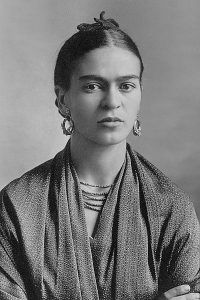
Magdalena Carmen Frida Kahlo Calderón was born on July 6, 1907, in Coyoacán, Mexico. She is renowned for her vibrant self-portraits that explore themes such as identity, the human body, and death. Although she denied the connection, she is often associated with surrealism. Her life was marked by a severe bus accident in her youth, which left her bedridden for extended periods and required her to undergo more than 30 surgeries. Frida had a complicated relationship with the muralist Diego Rivera, whom she married in 1929, divorced in 1939, and remarried in 1940. In 1939, her paintings were exhibited in France, and one of her works, "Self-Portrait - The Frame," became the first painting by a Mexican artist to be acquired by the Louvre Museum.
Magdalena Carmen Frida Kahlo Calderón was born on July 6, 1907, in Coyoacán, Mexico, at the Blue House, which would later become a museum honoring her legacy. Frida was the daughter of Guillermo Kahlo, a photographer of German descent, and Matilde Calderón, of Mexican origin. She had two older sisters. During her childhood, Frida contracted polio, which affected her health and caused one of her legs to grow thinner than the other. She attended the German College and excelled in her studies. In 1922, Frida suffered a severe bus accident that left her with multiple fractures and internal injuries, marking a turning point in her life.
After her recovery, Frida began painting as a form of expression and therapy. In 1928, she met Diego Rivera, a prominent Mexican muralist, who became her mentor and later her husband. Her relationship with Rivera significantly influenced her art and her identity as an artist.
This early period in Frida Kahlo's life laid the foundation for her artistic career and her distinctive style of self-portraits that explored her physical pain, cultural identity, and deepest emotions. Her work reflected her suffering and struggle to survive, establishing the groundwork for her to become one of the most influential artists of the 20th century.
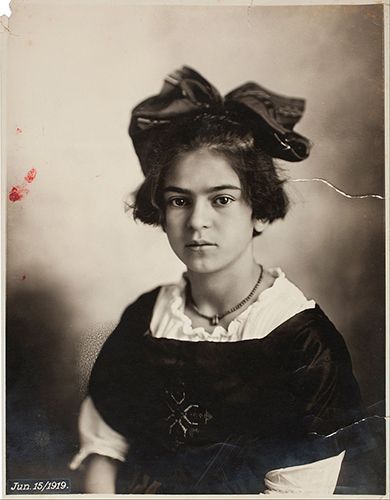
In August 1929, Frida Kahlo married Diego Rivera, a renowned Mexican muralist. From then on, her art underwent a significant change influenced by Mexicanism and Mexican national identity promoted by Rivera and other artists of the time. Frida adopted elements of folk art and pre-Columbian culture in her works, portraying herself in self-portraits dressed as a peasant or indigenous woman, showing her connection with the indigenous population.
During her stay in the United States with Rivera from 1930 to 1934, Frida faced personal and artistic challenges. In Detroit, she painted "Henry Ford Hospital," depicting her painful second miscarriage, reflecting her tragedy and struggle with fertility. This experience profoundly marked her art, turning it into an expression of her suffering and deepest emotions.
Despite the difficulties and losses she faced, Frida found in painting an escape and a way to give meaning to her life. Her works during this period reflected her loneliness, physical and emotional pain, as well as her cultural identity and connection to Mexican history. These years were fundamental in Frida Kahlo's artistic and personal evolution, laying the foundation for her recognition as one of the most influential and emblematic artists of her time.
During the period from 1935 to 1950, Frida Kahlo experienced intense artistic and personal growth. Despite facing health and emotional challenges, she continued to produce iconic works that reflected her pain, identity, and internal struggles. In 1938, the poet André Breton described her as a surrealist, although Frida claimed she painted her own reality, not her dreams.
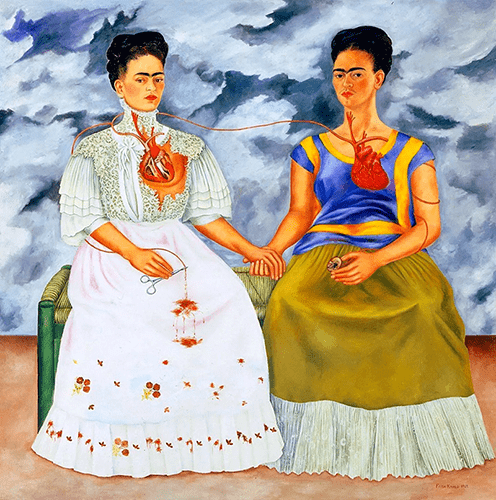
In 1939, she created "The Two Fridas," a self-portrait symbolizing her marital crisis with Diego Rivera and her cultural duality. This period was marked by tumultuous relationships, including Rivera's affair with her sister Cristina, which deeply affected Frida and changed her artistic focus.
Despite her personal difficulties, Frida continued to explore themes such as life, death, love, and identity in her works. Her unique style and focus on self-portraiture made her a prominent figure in Mexican art and the feminist movement. By 1950, her health had deteriorated further, limiting her ability to paint, but her artistic legacy was already firmly established.
Frida Kahlo became a cultural and feminist icon whose work continues to be celebrated and studied worldwide for its powerful emotional expression and unique representation of the human experience.
During the last years of her life, Frida Kahlo faced increasingly severe health challenges that affected her ability to paint and her quality of life. In 1953, despite her fragile health, her only solo exhibition in Mexico was held, where she attended in a hospital bed, demonstrating her determination and passion for art.
In 1954, Frida underwent a leg amputation due to a gangrene infection, which plunged her into deep depression and led her to attempt suicide several times. Despite her internal struggles, she continued to write in her diaries and create art that reflected her pain and suffering.
In February 1954, Frida was hospitalized after a suicide attempt, and although she promised not to relapse, she was hospitalized again in May for the same reason. Despite her health problems and physical and emotional pain, Frida showed courage and determination until the end.
On July 13, 1954, Frida Kahlo passed away at the age of 47 due to complications from bronchopneumonia. Despite her short life and numerous adversities, she left a lasting artistic legacy that has made her an iconic figure in art history and a symbol of strength, passion, and authenticity.
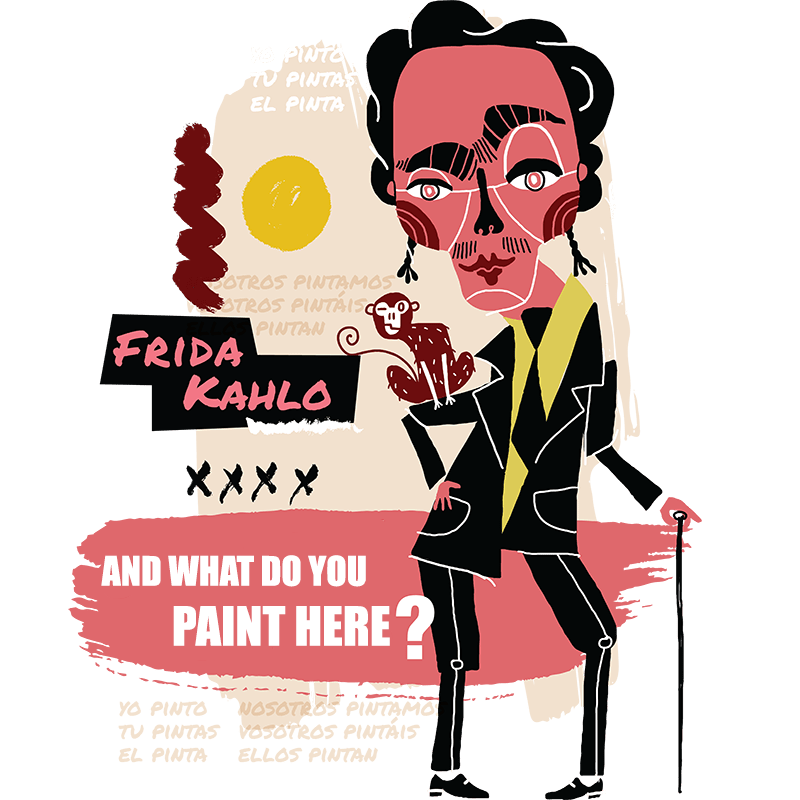
In her new reincarnation, Frida Kahlo remains a strong, determined, committed, sociable, and fun woman. She has accentuated her queer side and no longer suffers, neither for love nor for anything else. Her monkey Fulang-Chang has moved in with her to the houseboat she shares with her lover, Ching Shih. Chang and Ching don't get along very well. Most likely, one of them will end up thrown overboard.
Frida is amazed when she sees what they have turned her image into: a pop icon. She keeps creating non-stop. Now she's making NFT art, which sells like hotcakes. She's never had so much dough, and although Ching is determined to bury it in offshore islands, Frida dedicates it all to the cause. The resistance is now her reason for being. Cats are like the fascists of her time and must be stopped at all costs.
Despite her contagious joy and her spirit of overcoming, in each episode, poor Frida, who is a bit of a jinx, suffers a fateful accident: she's run over by an instant Bizum, crushed by a banner ad, lynched on Twitter, or encrypted in a Paypal account, but she always comes back to life and keeps smiling.
